Patronia: A Brush-Lettering Script Font That Feels Handmade
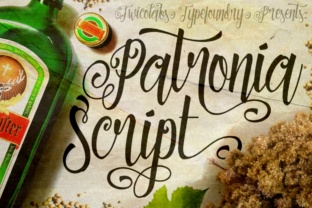
If you sell handmade goods, design printables, or create products that rely on beautiful lettering, you already know the struggle. You want a font that looks authentic—like something you actually wrote by hand—but you also need it to be clean enough to cut on a machine, print at small sizes, and reproduce reliably across different materials. That is exactly where Patronia steps in. This brush-lettering inspired script typeface brings together thick and thin strokes, varied spacing, and uneven baselines to create a genuinely handwritten feel. It is not stiff. It is not perfect. And that is precisely what makes it so useful for crafters and product creators who want warmth and personality in every project.
What Makes Patronia Different from Other Script Fonts
Many script fonts look beautiful on screen but fall apart when you try to use them on a physical product. The letters might feel too uniform, or the spacing might be so tight that small cuts become unusable. Patronia avoids these issues by mixing loose and tight kerning in a way that still reads clearly. The thick and thin lines give it that classic brush-lettering contrast, while the unique baseline combinations keep each word from looking mechanically placed. When I first tested Patronia on a simple sticker sheet, I was surprised at how natural it looked. The letters do not all sit on the same invisible line. Some dip slightly, others rise, mimicking the rhythm of someone writing with an actual brush pen. That subtle unevenness is what sells the handmade effect.
Where Patronia Shines in Product Design
If you create products where the font is the main visual element, Patronia is worth a close look. It works beautifully on candle labels, where a short phrase like "vanilla bean" or "fresh linen" needs to feel inviting and warm. For birthday invitations, the font adds a personal touch without requiring you to actually hand-letter each envelope. I have also used it on farmhouse-style signs, both as a cut file for wood and as a printed design on paper. The brush-lettering influence gives those signs a rustic, approachable feel that customers tend to love. Wedding welcome boards are another natural fit. Because Patronia includes varied baselines, the text looks like it was carefully written out by hand, which is exactly the aesthetic many couples want for their big day.
For smaller items like boutique tags, product labels, and sticker sheets, Patronia holds up well as long as you keep the text to a few words. Longer sentences can become harder to read because of the loose kerning in some letter combinations. But for names, titles, short phrases, and decorative wording, this font is a reliable choice. I have found it especially useful for holiday packaging. A simple "merry & bright" or "joy to all" in Patronia on a gift tag or treat bag instantly elevates the presentation. Customers notice the difference between a generic printed font and one that looks like it was brushed on by hand.
Practical Readability and Cutting Machine Advice
One of the first things I do with any new script font is test it on my cutting machine. Patronia performs well for most standard cuts, but there are a few things to keep in mind. The thick strokes cut cleanly, even at smaller sizes. The thin strokes require a little more care. If you are cutting vinyl for a mug or a tote bag, I recommend testing the font at the actual size you plan to use. At very small sizes, the thin parts can become delicate and may not weed as easily. For larger projects like wall art or welcome signs, this is not an issue at all. For tiny stickers or small product labels, you may want to size up slightly or use the font for the main word and pair it with a simpler sans serif for supporting text.
When printing Patronia on paper or cardstock, the results are consistent and attractive. The font reads well at medium to large sizes, and the handwritten feel comes through clearly even in black ink on white paper. If you are creating digital printables like planner pages, wall art, or greeting card templates, Patronia gives your designs a premium look without requiring any additional hand-lettering skills. That is a huge time saver when you are producing multiple designs for your shop.
Font Pairing Ideas for a Polished Look
Patronia is an expressive script font, so it pairs best with cleaner, more neutral typefaces. A simple sans serif font like a classic round or geometric style works well for secondary text. I often use a light sans serif for addresses, dates, or product descriptions, with Patronia handling the main headline or featured word. For a more traditional feel, a clean serif font can also work. The contrast between the brush-inspired strokes and the structured serif creates a balanced, professional look that suits wedding stationery and upscale product packaging. If you are designing for a more modern brand, try pairing Patronia with a bold display font for the main message and use Patronia for a decorative accent word. Just keep the pairing intentional. Patronia has a strong personality, so it is best to let it lead and choose a partner that supports without competing.
Checking Font Features for Your Projects
Before committing to Patronia for a specific product line, take a few minutes to explore what is included. Many script fonts come with alternates, ligatures, and swashes that can give your designs even more variety. If Patronia includes alternate characters, you can avoid repetitive letterforms when using the font across multiple products. That is especially valuable for shop owners who sell a range of items with similar wording. Ligatures help certain letter pairs connect more naturally, which improves the overall flow of the text. Swashes can add decorative flair to the beginning or end of a word, giving your designs an extra layer of polish. Check the file formats as well. OTF and TTF are standard for most cutting and design software. If you use specific programs like Cricut Design Space, Silhouette Studio, or Adobe Illustrator, confirm that the font files are compatible before you start a large production run. Multilingual support is another consideration if you sell to an international audience or create products in multiple languages.
Commercial Licensing and Selling Physical Products
If you sell products that feature Patronia, you need to understand the commercial licensing terms. For handmade sellers, printable creators, and small shop owners, using a font commercially typically means purchasing a license that covers your specific use case. If you sell physical products like mugs, shirts, candles, stickers, tote bags, or signs that include Patronia lettering, a standard commercial license usually applies. If you sell digital designs like templates, printables, SVG files, or digital downloads that include the font itself or editable text layers, you may need an extended license. Always check the specific terms for Patronia before listing products in your shop. A few minutes of verifying the license can save you from legal issues down the road and ensure you are using the font ethically. When in doubt, contact the font foundry directly. Most are happy to clarify what their license covers.
Realistic Examples for Your Shop
To give you a clearer picture of where Patronia fits best, here are a few real scenarios from my own shop. For a line of soy candles, I used Patronia for the scent names on the front labels. The brush-lettering style made each candle feel artisanal, and customers often commented on the packaging before they even lit the wick. For a set of birthday invitations, I used Patronia for the main greeting and a clean sans serif for the details. The combination was elegant without being stuffy. For holiday product packaging, I designed simple tags with "to" and "from" in Patronia, paired with a small serif for the names. They looked handmade in the best possible way. For wall art prints, I used Patronia for a single motivational word at a large size. The thick and thin strokes created visual interest, and the uneven baseline kept the design from feeling mass-produced.
Patronia is not a font for long paragraphs. It is a display font, best used where you want the lettering itself to be the focal point. If you keep that in mind, it will serve you well across a wide range of products. Whether you are designing for weddings, holidays, home decor, or everyday gifts, Patronia brings a handwritten warmth that customers can feel. And in a market where so many products look the same, that handmade authenticity is exactly what sets your shop apart.